


.png)
What 2025 Made Possible: COP30 Insights, Mass Timber Momentum, and Forest Innovation
Updated: Jan 26

Dear Pilot Projects partners and friends,
From the Call of the Forest in Paris to the rainforests of Guyana, from the Mayan Jungle to the Brazilian Amazon, from international Mass Timber conferences on the West Coast to all-wood housing projects in Amsterdam, and wrapping up with COP30 in Belem - in 2025 our work took us around the globe and into the heart of the world’s great cities - and forests!
We are grateful to everyone who collaborated with us this year, whether this was our first project together or one of many since our founding in 2010. With you and our many partners, Pilot Projects tackled increasingly complex work, diving deeper into the social, ecological, technical, financial, and political interdependencies that lead to sustainable environments, and in particular, buildings and forests. The year really showcased and tested the breadth of our work and the strength of our partnerships.
None of this would have been possible without our incredible core team. We are thankful for the dedication and expertise of Scott Francisco, Mack Phillips, Michael Southwood, Sarah Wilson, Ajwad Kabir, Milla Lopes, and Valeria Romano. We were also fortunate to have a talented group of interns working with us from Columbia University’s School of International and Public Affairs (SIPA) program, and exceptional new partners in Guyana and Brazil.
Like any meaningful work, this year came with its share of challenges. It was demanding, complex, and at times risky. It was also deeply productive, which is a balance of the teamwork and resilience that Pilot Projects strives to bring to every collaboration.
No-body, said it was ea-sy… No-one-ever-said it would be this hard.
2026 is off to a strong start with new partnerships including the Commission for Environmental Cooperation, Rainforest Alliance, and Coillte Ireland. Our work continues to focus on sustainable forest management for conservation and the built environment, empowering youth and forest communities, and connecting forest producers to consumers through powerful synergistic relationships.
If our work aligns with your upcoming vision and needs, we would welcome the opportunity to explore what we could build together. The highlights below offer a glimpse into what a typically busy year looks like for us and what we’re all about.
COP30 Highlights: Forests, Bio-Materials, and Communities

When Pilot Projects learned that COP30 was coming to Belem, Brazil, we were excited by the opportunity to showcase how integrating forests and the built environment can contribute more to global climate strategies. The conference was soon dubbed the Forest COP given its strategic location at the “gateway to the Amazon”. As the program details were coming together, we saw tremendous opportunities for Pilot Projects to help build the momentum for innovative, community-centered design that leads to real-world conservation outcomes. This is what we exist for!
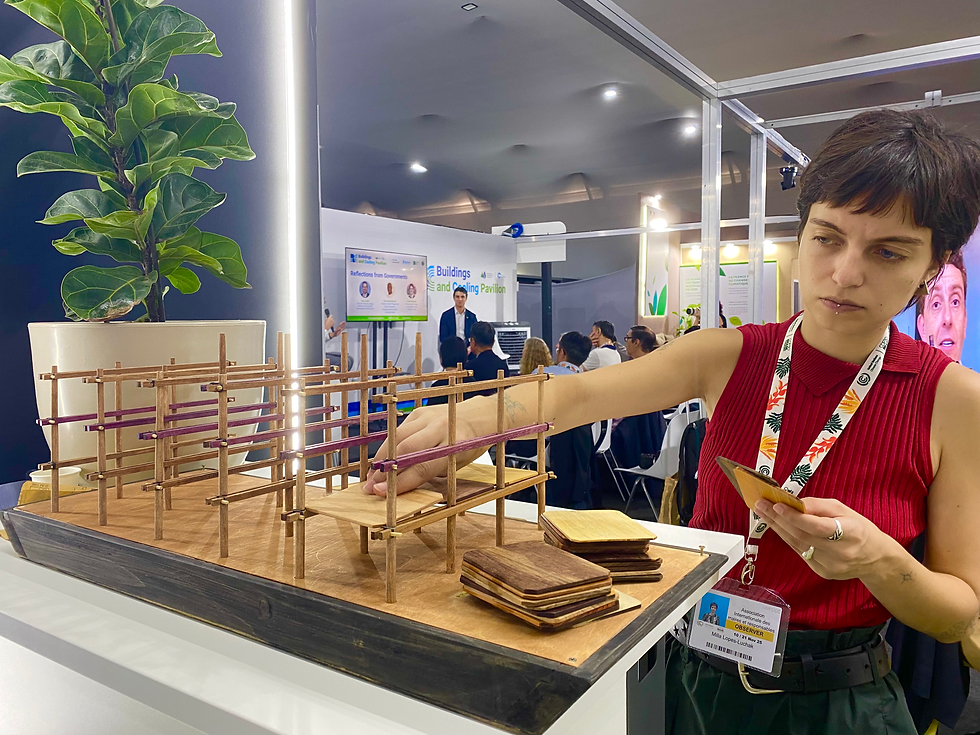
Enter Habitat Rio: we began developing our first bold idea for COP30 in early 2025: a floating, multi-story mass timber pavilion built using local resources, especially conservation timber harvested by indigenous communities in the region. The concept created a practical structure to host dozens of events while demonstrating the real-world potential for bio-based, regionally rooted building solutions.
Working with a newly-formed consortium of like-minded and diversely-skilled Brazilian and international partners, we started co-designing the structure, originally named Habitat Bio, and began raising funds. Like the entire COP planning process, it was an uphill sprint for funding and completion by November. Although the pavilion was not fully realized for COP30, the process proved immensely valuable and reinforced our conviction that structures that are inhabited, touched, and tested in real life can have an outsized and catalytic impact on leadership decisions.

One of the clearest messages from COP30 was that conservation needs to receive the same attention and investment as restoration. Community-based forest management emerged as the heart of long-term climate change mitigation efforts, and the Forest COP marked the highest level of Indigenous and traditional community participation to date. The importance of funding forest-dependent and resident communities, who carry much of this work, was also a central theme and reinforced the importance of land sovereignty, traditional knowledge, and fair compensation. It was encouraging to see the vision behind Habitat Bio aligned so closely with one of the central themes: the critical role of sustainable forest management as a viable conservation strategy for natural forests under threat.

Milla and Scott brought the Habitat Bio project to life across multiple conference venues with the scaled model constructed by our team with 24 species of regional hardwoods. As COP approached and the timing for conference construction fell out of reach, we shifted our efforts and attracted the attention of leaders who represent over one hundred Indigenous communities in the Trapajós region. We are committed to building this structure, now named Habitat Rio. This name links our original vision to the indigenous communities in a river-dense part of the Amazon, with the pavilion serving as a flexible and practical infrastructure for community activities.
It will also inspire new generations of leaders, entrepreneurs, and forest stewards to imagine sustainable management and local to global opportunities. We are continuing to explore sponsorship and funding opportunities and would welcome the opportunity to collaborate with partners who share this vision and help bring Habitat Rio to life.
Our greatest takeaway was the urgent need to better integrate sustainable forest management into global conservation strategies for tropical forests, and especially financing for ecosystem services and restoration. We plan to focus heavily on this theme in 2026 and are actively looking for new projects, partners, and funding pathways to continue to make a lasting impact.

Guyana Forest Value Creation Hubs: Phase one complete
Not far from Brazil, in Guyana’s own Amazon forest, the lack of robust value-creation systems means that local and indigenous people make daily trade-offs between their own prosperity and the future of the forests that they live in and with. Today’s dilemma is that products from “sustainably managed” forests are often not sufficiently profitable to compete with other uses that require destroying the forests and replacing them with large farms, cattle ranches, or open-pit mines.
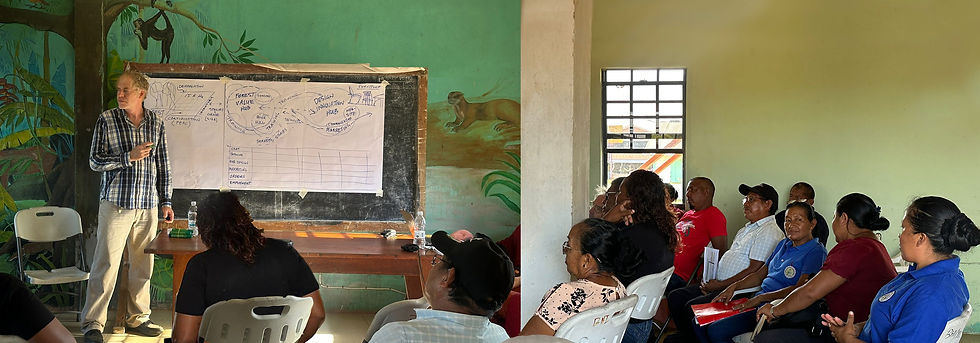
Our Guyana Forest Value Hubs project piloted a cluster of value-creation centers to help local and indigenous people add value to products like “conservation timber” and other non-timber materials to contribute to village-level economies. Since January 2025, our team worked tirelessly on this project, co-designing the hubs, creating a new furniture line that elevates these products, and meeting with community organizations, young people, elders and government officials.
From Scott’s perspective, ‘I can say that the year spent building trust and learning from an incredible consortium of local and indigenous leaders has been a career highlight’.

We gained much positive momentum this year, including
Design and planning for efficient sawmills and kilns near the Annai communities of Rupununi
New training programs were developed for harvesters, sawyers, craftspeople, and youth at the Bina Hill Youth Training Center
Innovation and Training Hub launched in Georgetown
Village councils assisted with forest inventories and PEFC certification for their sustainable forest management plans
You can see more of what this work looks like by visiting an album from one of our latest trips to Guyana in October.
2026 will be a big year for our ongoing work in Guyana. We would love to share our learnings with you, hear from your experience, engage with new partners, and access additional financing to support this work. Please reach out to us regarding any of these opportunities!
Pilot Projects team worked closely with local businesses and craftspeople in Guyana as we co-designed the Design Innovation and Training Hub in Georgetown.

Mass Timber’s Tipping Point: Reporting at the International Mass Timber Conference and Climate Week NY

Co-creating the future of architecture is a cornerstone of our work. But imagine asking some of the busiest, most innovative architecture and engineering firms in North America to gather their top people and spend a whole day with us in a conference room talking about “mass timber”.
This took planning, and some guts. Early in 2025, we completed our two-year study with Architecture 2030 on the use and challenges of mass timber through the unrivaled experience of outstanding architects and engineers across North America, funded by the US Forest Service and US Endowment for Forests. After recording and analyzing more than one hundred hours of facilitated conversations, we are more convinced that this report can help us break through some of the challenges and usher in the tipping point where this sustainable solution to low-carbon construction can become mainstream.
We were delighted to present our findings at the International Mass Timber Conference in Portland, at Woodrise in Vancouver, and at the AIA Center for Architecture during New York Climate Week. We are truly thankful to our many contributors who shared detailed and personal stories of their journeys - this is what makes the report so unique. Please visit the project page to access the Mass Timber Tipping Point Report and Resource Library.
Protecting the Amazon Through Private Sustainable Development

Meandering like a river through the year of 2025 is one more beautiful project. We were asked to develop a ground-up conservation plan for a family-owned 2100-hectare forest property in the Maués region of Amazonas. This property represents many of the typical challenges to conservation in the region. It requires an economic model that supports implementation and long-term sustainability. The property also has a small community of local people living on it who, although having no legal title or status on the land, have come to depend on it. It is a challenging formula. The property owners desire that the forest and natural assets of the property are preserved, and that the local people can have established rights and responsibilities connected to this land.
We invited collaborators who are deeply committed to the people in the region and who support the best results in this very sensitive area. The Federal University of Amazonas (UFAM), Sementes da Amazônia, and other local leaders and church representatives bring together experience and expertise in forest-based and community-based research, implementation of conservation units, and management of large-scale projects with diverse stakeholders. The collaborators are exploring Brazil’s unique Private Sustainable Development Reserve (RPDS), which is a seldom used and up-and-coming category of conservation that integrates conservation priorities with opportunities for sustainable and economically beneficial management for the local population. We would love to hear from you if you have questions or ideas as we complete this work in 2026.
Coming up in 2026
With the momentum of 2025 behind us, we are so excited for what this New Year will bring. We will continue with our focus on the synergies of people, forests, and buildings working together to co-create the better world we know is possible.


Comments